
5 Steps How to Regulate Your Nervous System Without Adding Pressure to Your Day (A 10-Minute Guide for the Overstretched)
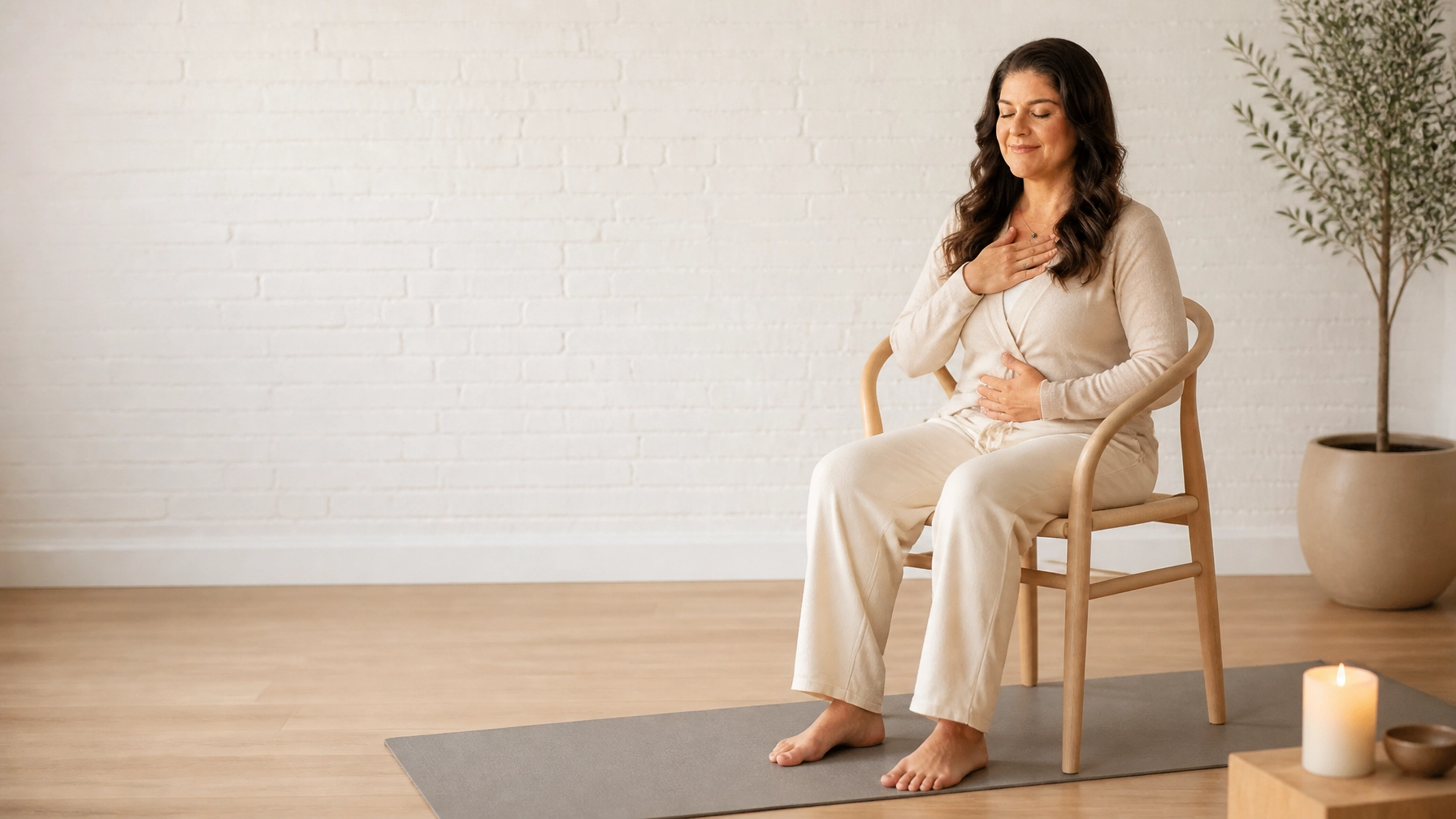
You do not need another demanding routine.
You do not need an hour-long class, a perfect morning, or a new version of yourself by Monday.
You may need ten quiet minutes.
For nurses, teachers, therapists, managers, and caregivers, the day can begin with giving and end with depletion. Your body keeps moving, but your nervous system may never receive the message that it is safe to soften.
This is where nervous system regulation begins — not with pressure, but with attention.
At Aligned, MBPYC. NamasTen®, we call this the 10-Minute Mandate™: ten intentional minutes of breath, movement, and soul care. Small enough to begin. Steady enough to transform.
Ten minutes. One nervous system. A more resilient way forward.
Respira hondo. Take a deep breath. Un paso a la vez. One step at a time.
What nervous system regulation really means
Your nervous system is constantly interpreting information: deadlines, conflict, noise, physical demands, emotional labor, and even the negative news waiting on your phone.
When stress continues without enough recovery, your body may remain in a state of high alert. You might notice:
- Shallow or hurried breathing
- Muscle tension, especially in the jaw, neck, and shoulders
- Trouble sleeping or staying asleep
- Irritability or emotional numbness
- Difficulty concentrating
- Feeling tired but unable to rest
- A sense that even small tasks are too much
Nervous system regulation does not mean eliminating stress. That is not realistic. It means practicing small, repeatable signals of safety and recovery so your body can return more easily toward a calmer parasympathetic baseline.
Research on slow breathing, gentle yoga, mindfulness, and relaxation suggests these practices may support heart-rate variability, perceived stress, and other markers connected with autonomic balance. A review of yoga-based interventions and stress-related outcomes is available through the National Library of Medicine.
The goal is not to "fix" yourself.
The goal is to build the Architecture of Resilience™, one supportive choice at a time.
Your 10-minute nervous system regulation practice
Choose a place where you can be relatively undisturbed. Sit in a chair, stand near a wall, or use a mat. You do not need special clothing.
If any step feels activating, uncomfortable, or unsafe, stop and choose a simpler option. You are always allowed to keep your eyes open, look around the room, or return to ordinary breathing.
Step 1: Arrive before you ask yourself to change — 1 minute
Before regulating, notice where you are.
Feel the support beneath your feet or seat. Let your hands rest somewhere comfortable. Look around the room slowly and identify three neutral objects — a lamp, a window, a cushion.
You are not trying to create bliss.
You are giving your attention a place to land.
Try saying quietly:
"I am here. This is now. I do not have to solve everything in this minute."
This orienting practice can be especially helpful when you feel scattered or overwhelmed. For somatic grounding for trauma, external awareness is often a gentler starting point than closing your eyes and turning immediately inward.
Keep your gaze soft.
Let the room meet you.
Step 2: Lengthen the exhale without forcing the breath — 2 minutes
Now bring your attention to your breathing.
Inhale gently through your nose for a comfortable count of four. Exhale slowly for a count of six. If counting creates pressure, simply make the exhale a little longer than the inhale.
Repeat for several rounds.
- Inhale: soft and easy
- Exhale: longer and unhurried
- Pause: optional, never forced
There is no prize for a deeper breath. A small breath done with less effort is enough.
Extended-exhale breathing may help support parasympathetic activity and reduce the feeling of internal urgency. But your body is the guide. If you feel dizzy, breathless, or anxious, return to your natural rhythm.
Place one hand over your chest if that feels comforting. Or keep both hands on your thighs and feel the contact.
No performance. No perfect pattern. Just a little more room.
Step 3: Ground through the senses — 2 minutes
Stress often pulls attention into the future:
What happens next?
What did I forget?
How will I get through the rest of the day?
Grounding gently returns you to the present.
Try this shortened sensory scan:
- Name five things you can see
- Notice four things you can feel
- Listen for three sounds
- Identify two scents
- Notice one taste, or imagine a familiar comforting one
You can also press your feet gently into the floor for three seconds, then release. Feel the difference between effort and support.
If an internal body scan feels too intense, stay with external details. Look at the shape of a plant. Notice the temperature of the air. Feel the chair beneath you.
Trauma-informed practice is built on choice. You do not have to push through discomfort to make progress. Regulation grows through tolerable, repeatable experiences, not through overriding your boundaries.
Step 4: Add four minutes of gentle movement — 4 minutes
Movement can help your body complete some of the physical story of stress. Keep the range small. Keep the pace slow.
This is not a workout.
It is a conversation with your body.
Minute 1: Shoulder rolls. Sit or stand tall enough to breathe comfortably. Circle your shoulders slowly forward three times, then backward three times. Let your jaw soften. If your shoulders do not want to move far, that is completely fine.
Minute 2: Seated or standing side stretch. Reach your right arm up only as far as feels easy. Lean slightly to the left. Breathe once or twice. Return to center. Switch sides. Imagine creating space between your ribs rather than trying to achieve a deep stretch.
Minute 3: Gentle spinal movement. If seated, place your hands on your thighs. Inhale as you lengthen through the crown of your head. Exhale as you gently round your spine. Move slowly between these two shapes. If you are standing, try a small pelvic tilt or simply sway from side to side. Stability is part of the practice.
Minute 4: Grounding sway. Shift your weight gently from the right foot to the left. Keep both feet connected to the floor. Inhale as you return to center. Exhale as you shift. Let the rhythm be almost invisible.
This simple 10 minute yoga routine is designed to be accessible on a busy day. You can practice it in a break room, beside your desk, or in your living room before the rest of the household wakes.
Step 5: Close with a soul-centered signal of safety — 1 minute
Come back to stillness.
Notice one change, however small:
- Your feet feel warmer
- Your breathing feels less hurried
- Your shoulders have dropped
- Your thoughts have a little more space
- You feel exactly the same, but you kept a promise to yourself
Place a hand over your heart or rest your palms together.
You might offer a simple prayer:
"Help me meet this moment with steadiness, wisdom, and grace."
Or repeat:
"I can take the next right step."
Soul care does not need to be elaborate. A breath can become a prayer. A pause can become a sanctuary. A daily practice can become a way of remembering that you are more than what you produce for others.
How to make burnout recovery without pressure sustainable
The most supportive practice is the one you can return to.
Try attaching these ten minutes to something already in your day:
- After brushing your teeth
- Before opening your inbox
- During a lunch break
- After putting the children to bed
- Before transitioning from work to home
Start with the minimum.
On a difficult day, practice only Step 1 and Step 2. Two minutes still count. On a fuller day, complete all five steps. Consistency matters more than intensity.
You may also notice changes beyond the practice itself: a slightly easier transition after work, a more patient response, less tension before sleep, or a greater ability to pause before reacting.
These are meaningful signals.
Not because you are suddenly calm all the time, but because your recovery window is beginning to widen.
A note for caregivers
If you spend your days caring for everyone else, self-care can sound like another assignment. Let this be different.
You do not need to earn rest.
You do not need to be at your breaking point to pause.
Your ten minutes are not an interruption to your responsibilities. They are a way to return to them with more of yourself available.
And if children are nearby, invite them into one minute of breathing or gentle movement. A family reset can be simple: feet on the floor, hands on the belly, one long exhale. A little calm can travel through a home.
When to seek additional support
This practice is educational and supportive, but it is not a substitute for medical or mental health care.
Please speak with a qualified healthcare or mental health professional if you are experiencing persistent anxiety, depression, panic, trauma symptoms, significant sleep disruption, or burnout that is affecting your ability to function. If a breathing or movement practice increases distress, stop and seek guidance.
There is strength in support.
There is wisdom in slowing down.
Your next ten minutes
Nervous system regulation does not require adding more pressure to your day.
It asks for a deliberate pause.
A supportive breath.
A grounded body.
A little less urgency.
A return to soul.
At MBPYC, the NamasTen™ method turns this idea into a structured, faith-rooted journey: ten weeks of mindful movement, prayer, and daily practice designed for real life.
New here? Start with the free What's Your Verse?™ tool, see the schedule, or apply for next year's class.
Begin where you are.
Ten minutes is enough to begin building the architecture of resilience.
Un paso a la vez.
Wellness disclaimer: This article is for educational and inspirational purposes only. It is not clinical, medical, psychological, or mental-health advice, and it does not diagnose or treat trauma, burnout, anxiety, PTSD, or any other condition. Mindful movement, breathing, and meditation may not be appropriate for everyone. If you are experiencing significant distress, trauma symptoms, safety concerns, or impairment in daily life, please consult a qualified healthcare or mental-health professional. Stop any practice that causes pain, dizziness, or increased distress.